The E-commerce industry is an evergreen business and starting your E-commerce Business is one of the most efficient Ways To Make Money Online to achieve your financial freedom from the comfort of your house. E-commerce is no doubt the best way to start your entrepreneurial journey in 2023.
Starting a business is not easy, but if you’re creative, dedicated, and take the right steps, you can be the next entrepreneur and potentially achieve financial success. The E-commerce business is exploding as it is going to Hit Almost $5.7T by the end of 2023. It clearly shows it is creating more opportunities for you to start.
Keep in mind, that building a successful venture takes time and effort, but the potential rewards in this exploding e-commerce industry are significant. With strong determination and the right steps, you can turn your business idea into a lucrative source of earnings.
In this article, you’ll find a step-by-step guide to starting your e-commerce business in 2023. Whether you’re a newbie in e-commerce or know some basics, this guide is going to help you kickstart your journey in the online business world.
How To Start an E-commerce Business?
For the successful starting of an e-commerce business, you need to go through these 6 steps:
Step 1: Research Business Models of E-commerce
Research is the very first crucial step that helps you find the business model that suits your expertise or knowledge. We all know that a single business model doesn’t work for everyone. Before deciding what to sell on the internet, you need to understand the different business models and their features.
Let’s take a look at each of the e-commerce business models briefly:
Dropshipping
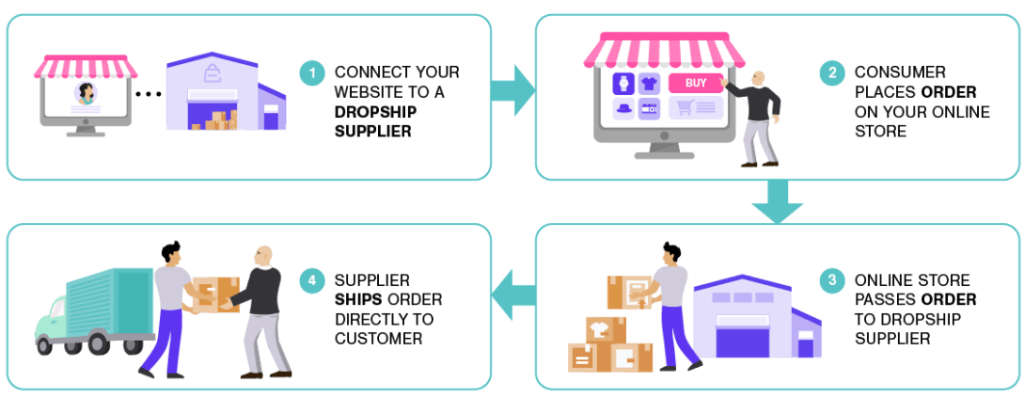
The dropshipping model is one of the easiest ways to start an online store. Dropshippers collaborate with manufacturers and order fulfillment centers to store, package, and ship the products to the customers on their behalf. This model lets you run your business successfully without actually having the inventory.
As dropshipping is a simple and low-investment e-commerce business model, many new online entrepreneurs are doing dropshipping business. It can be operated in your spare time which means you can perform your ongoing job side by side.
The picture below shows how dropshipping works:
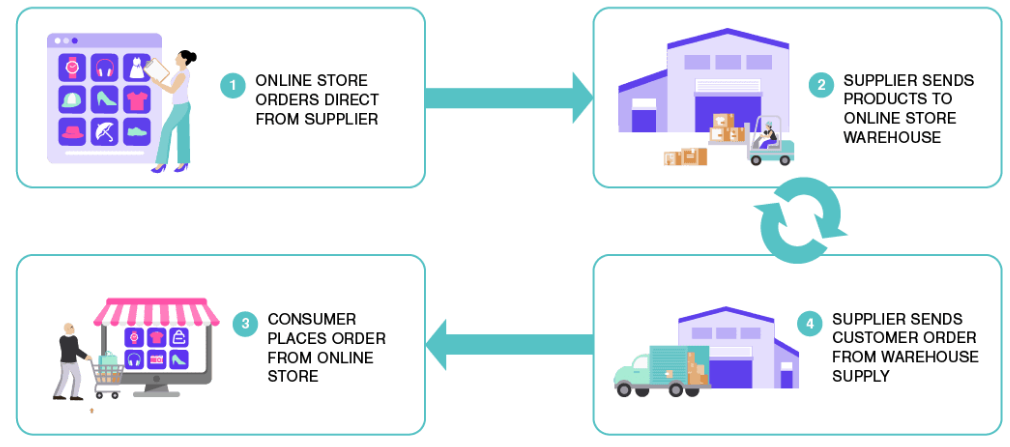
Wholesale Retail
In the wholesale retail business model of e-commerce, wholesalers purchase products in large quantities from manufacturers with certain discounts and then sell those products online at retail prices.
This e-commerce business model is for those people who want to build their own brand image. It gives people more control over the products. At the same time, this business model takes quite more time and effort as compared to dropshipping side by side because you’re the one who is responsible for manufacturing, packaging, and shipping your products to the customers.
The picture below describes how the wholesale retail e-commerce business model works:
Private Labeling
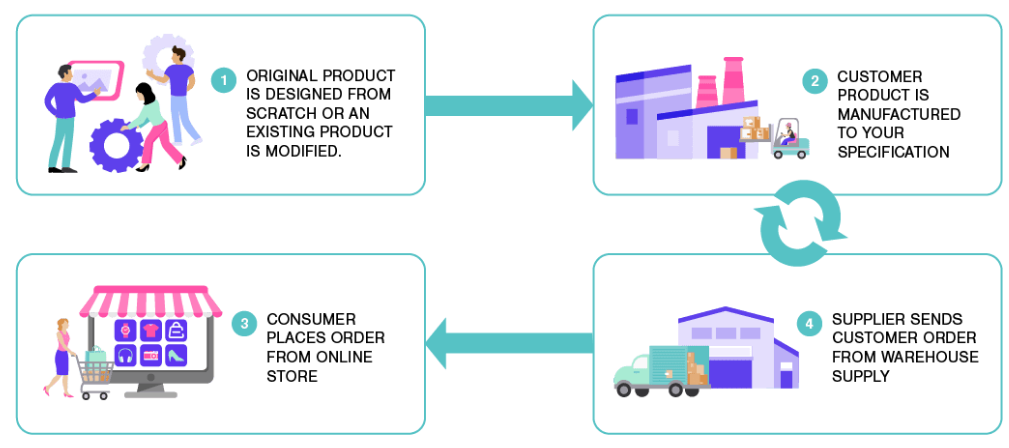
In the private labeling model, you have the products exclusively manufactured for your business. This e-commerce business model helps entrepreneurs build their brand image and gives them more control over product quality.
Private labeling requires more upfront investment unlike dropshipping or wholesale retail business because you’ll need to buy inventory in bulk and also pay for storing your products in the warehouse.
The picture below shows how the private labeling model works:
Step 2: Choose Your Niche
The crucial part of opening an online venture is choosing an appropriate niche to work on. You can do your research on successful companies already involved in such business.
There should be competition on the nice that you are going to pick because if you pick the niche with very little competition, you’re going to fail. It doesn’t mean you have to pick an overcrowded niche. It is better to skip those products dominated by top brands. The more specific you are in choosing a niche, the less competition you face.
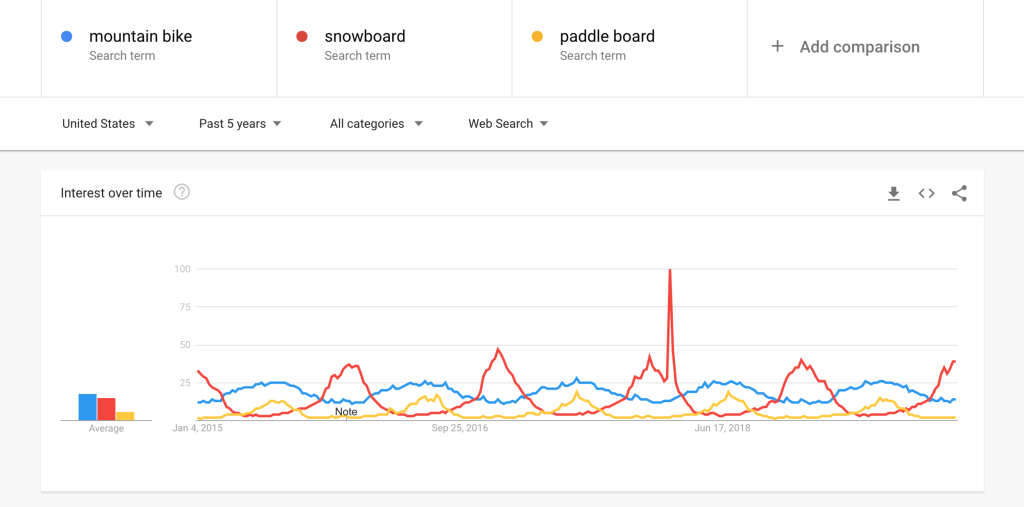
Using Google Trends to Research Niche
Google Trends is a free keyword trend research tool from Google that helps you to research the specific niche’s popularity. This tool shows the trend of the niche if it’s growing, steady, or declining. In case, the engagement in your niche is declining, you should consider changing your niche.
You should select a product category with at least 1,000 keywords and target a blog niche that is rising on social media where people are promoting affiliate products. You can boost profits with a couple of affiliate deals while you don’t have to worry about shipping hassles and set up a successful venture.
Always keep in mind, that finding the right niche is key!
The picture below shows the keyword trend of a product over the past 5 years:
Step 3: Source Your Products
The next step in starting an e-commerce business is sourcing your products. Once you’ve found the product to sell, it’s time to source the products. If you’re going to sell physical products, you can work with a manufacturer to make a product, which will reduce your time and effort.
Now, ask yourself if you are going to order products in bulk and store the inventory in a warehouse. If you’ve decided so, you’ll need to prepare for storage space and capital raise to order products upfront. Meanwhile, you have the authority to ship items on your own.
Some businesses pick the dropshipping method where products are sourced when someone places an order. In general, dropshipping can reduce overhead costs but can be difficult since inventory levels and shipping are not in your hands.
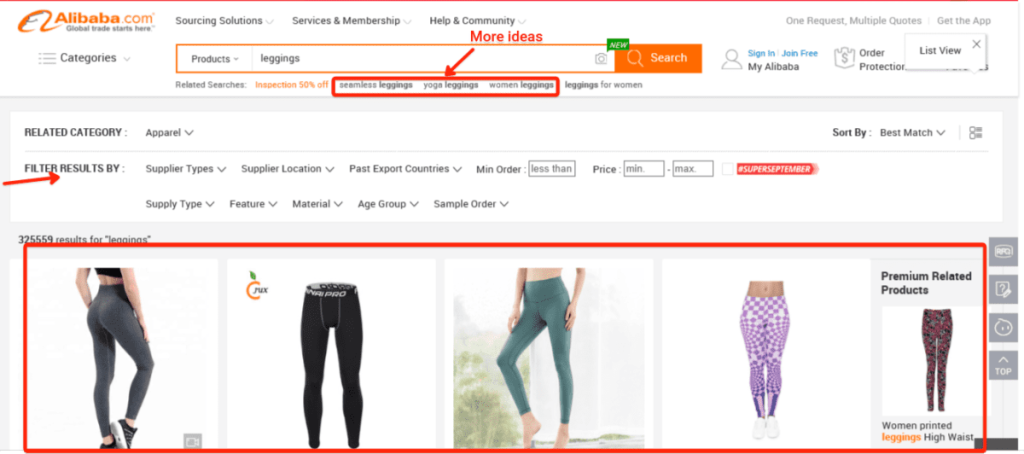
The picture below shows the product sourcing from Alibaba which is the world’s leading product-sourcing marketplace:
Step 4: Register Your Business
Before you start selling, you need to follow some important steps designed by law to start your business. Firstly, you need to register your business by choosing a legal structure. Then you can apply for an Employer Identification Number(EIN) for your business which you can get for free on the IRS website. Once you have picked a name for your business, check if it is available or not through your local secretary of state and the U.S. patent and trademark office.
Now, you need to choose a legal structure for your business, like LLC, corporation, partnership, etc. You can consult a legal expert to decide on this matter. You may also need additional licenses or permits depending on your nature of business, its location, and so on
Step 5: Set Up Your E-commerce Website
Your e-commerce website is basically your digital storefront where customers get to learn about your business, dive into your products page, and purchase items.
You can create a website easily with an online store builder which will guide you through every step including getting a domain name, handling inventory, and payments. Popular online store builder includes Shopify, Squarespace, BigCommerce, etc.
If you have a small business and want to test e-commerce, you can check for Free e-commerce Website Builders on the internet. However, if you have unlimited products and want to access advanced tools like shipping labels and sales analytics data, you should consider buying a premium subscription.
Also, you can hire an expert in e-commerce design or developer if you prefer not to do it on your own. The best e-commerce software should suit your capital and skills.
Step 6: Order Fulfillment
Order fulfillment deals with getting products to the customer’s hand after they make an order. Most e-commerce website builders provide shipping label printing, which is the first phase of order fulfillment. While some offer the ability to add shipping charges to a customer’s order at the time of checkout.
If you are considering handling order fulfillment yourself, you should research shipping rates to get an idea about the cost. You should look for an online store builder that can make your shipping process easier. In my opinion, Shippo will be best for you. In e-commerce, customers across the globe can connect to your website, so you should mention on your website if shipping is available worldwide or in a specific area.
You can also outsource this process to an e-commerce fulfillment center or use a service like Fulfillment by Amazon if you’d like to. Fees may vary accordingly for order fulfillment.
Step 7: Market Your E-commerce Business
Marketing your e-commerce business is the best approach to scale your business operation. It is the final step is starting an e-commerce business. You can follow these steps to market your business:
- Hire more people in key positions, that will manage your routine and tasks and allow you to focus on scaling.
- Buy software that can automate your task.
- Streamline your costs by switching to wholesale suppliers.
- Pay for advertising across all channels to drive more people to your website
- Offers more deals, discounts, and variants.
- Market a lot on social media platforms like TikTok & Instagram.
Conclusion
Starting an e-commerce business in 2023 has great potential but you should make sure that you’ve done proper planning and research about the market. You should prioritize more in customer satisfaction to grow your business. Also, you need to adapt to new technology, market trends, and customer demands. I strongly believe that with a solid strategy and dedication, a thriving online business can be built.
Don’t forget to mention which type of e-commerce business model you are going to try.
Good Luck to you!